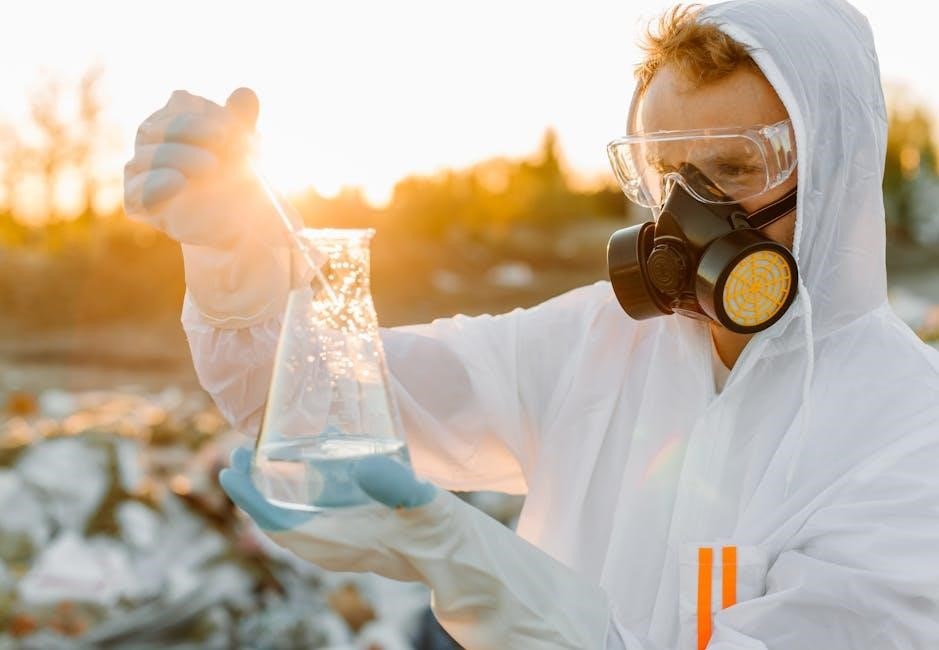
AP Environmental Science, 4th Edition, by DS Borisova (2022) and A.I. Saprykin, provides a lab-based course overview, focusing on ecological issues and sustainability.
Course Overview and Objectives
This AP Environmental Science course, as taught by Mr. Ricardo Pelayo, is designed as a rigorous, lab-focused exploration of environmental principles. The primary objective is to equip students with the scientific knowledge and critical thinking skills necessary to understand and address complex environmental challenges.
Students will delve into topics ranging from ecological systems and biodiversity to pollution, climate change, and sustainable resource management. The curriculum incorporates current research, including studies on microplastics (Saprykin, 2023) and the impacts of climatic factors on reproductive health (Tembotova, 2023).
A key goal is to prepare students for the AP Exam, fostering analytical abilities and a deep appreciation for the interconnectedness of Earth’s systems. The course emphasizes practical application through laboratory investigations and real-world case studies.
The Importance of Environmental Science
Environmental Science is critically important in the 21st century due to escalating global challenges like climate change, pollution, and resource depletion. Understanding these issues, as highlighted in recent research (Tembotova, 2023; Saprykin, 2023), is no longer optional, but essential for informed decision-making.
This course, based on the 4th Edition materials, emphasizes the interconnectedness of natural and human systems. It addresses problems like overgrazing and soil erosion (Central Caucasus studies) alongside broader concerns like microplastic contamination.
By studying environmental science, students develop the capacity to analyze complex problems, evaluate potential solutions, and advocate for sustainable practices. This knowledge empowers them to become responsible stewards of the planet and contribute to a healthier future for all.

Key Scientific Concepts

Core concepts include ecological principles, biodiversity, population dynamics, and Earth’s systems – all crucial for understanding environmental challenges, as detailed in recent publications.
Ecology and Ecosystems
Ecology, the study of interactions between organisms and their environment, forms a foundational pillar of AP Environmental Science. Understanding ecosystems – encompassing both biotic (living) and abiotic (non-living) components – is paramount. Recent research highlights the significant problems facing mountain semiarid ecosystems, specifically overgrazing, grassland degradation, and subsequent soil erosion in the Central Caucasus region.
This underscores the delicate balance within ecosystems and the cascading effects of disturbances. The course delves into energy flow, nutrient cycles, and trophic levels, examining how these processes maintain ecosystem stability. Analyzing these interactions is vital for comprehending environmental challenges and developing sustainable solutions, as emphasized by current scientific literature.
Biodiversity and Conservation
Biodiversity, the variety of life on Earth, is crucial for ecosystem health and human well-being. AP Environmental Science explores the importance of genetic, species, and ecosystem diversity, alongside the threats they face. Current research, including work by A;I. Saprykin (2023), increasingly focuses on the pervasive issue of micro- and nanoplastics in the environment, representing a novel threat to biodiversity.
Conservation efforts are examined, ranging from habitat preservation and restoration to species-specific recovery plans. The course investigates the ethical, economic, and aesthetic arguments for conservation, alongside the challenges of balancing human needs with environmental protection. Understanding these complexities is essential for informed decision-making regarding our planet’s resources.
Population Dynamics
Population dynamics, a core concept in AP Environmental Science, examines how populations of species change over time. Factors influencing population size – birth rates, death rates, immigration, and emigration – are thoroughly investigated. The concept of carrying capacity, the maximum population size an environment can sustain, is central to understanding these dynamics.
The course explores different models of population growth, including exponential and logistic growth, and their implications for resource use. Furthermore, it addresses human population growth and its environmental impacts, referencing concerns about overgrazing and grassland degradation, as highlighted in studies of the Central Caucasus region. Understanding these principles is vital for sustainable resource management.
Earth Systems and Resources
Earth Systems and Resources examines geological cycles, water resources, and soil composition, crucial for understanding environmental challenges and sustainability principles.
Geological Cycles
Geological cycles are fundamental processes shaping Earth’s landscape and resource distribution. These cycles, including the rock cycle, plate tectonics, and weathering, profoundly influence environmental systems. Understanding these cycles is critical for analyzing resource formation, natural hazards, and long-term environmental change.
The Central Caucasus region exemplifies geological impacts, facing challenges like overgrazing, grassland degradation, and soil erosion – all linked to geological processes and human interaction. Analyzing these cycles helps predict and mitigate environmental risks. Furthermore, the study of these cycles provides context for understanding the distribution of essential minerals and fossil fuels, impacting resource management strategies.
Investigating these cycles is essential for a comprehensive understanding of Earth’s dynamic systems and their influence on life and the environment.
Water Resources
Water resources are vital for all life, encompassing freshwater sources like rivers, lakes, groundwater, and glaciers. Their availability and quality are increasingly threatened by pollution and overuse. Understanding hydrological cycles, water management strategies, and the impacts of climate change on water resources is crucial.
The assessment of adverse effects of natural and climatic factors on reproductive health, as highlighted in recent research (FA Tembotova, 2023), indirectly links water quality to human well-being. Contaminated water sources can exacerbate health issues. Effective water resource management requires considering both ecological needs and human demands.
Sustainable practices, including conservation and responsible usage, are essential for ensuring long-term water security for ecosystems and communities alike.
Soil Composition and Erosion
Soil, a complex mixture of minerals, organic matter, water, and air, is fundamental to terrestrial ecosystems and agriculture. Its composition directly influences plant growth and overall ecosystem health. Understanding soil horizons, texture, and nutrient cycles is paramount in environmental science.
Research emphasizes significant problems like overgrazing and grassland degradation, leading to soil erosion, particularly in mountain semiarid ecosystems (Central Caucasus). Erosion diminishes soil fertility, reduces agricultural productivity, and contributes to sedimentation in waterways.
Mitigation strategies include sustainable land management practices, such as contour plowing, terracing, and reforestation. Addressing soil degradation is crucial for maintaining biodiversity and ensuring long-term food security.

Pollution
Pollution encompasses air, water, and solid waste contamination, including emerging concerns like microplastics, as detailed by Saprykin (2023), impacting ecosystems globally.
Air Pollution: Sources and Effects
Air pollution stems from diverse sources, encompassing both natural events and human activities. Industrial processes, vehicle emissions, and agricultural practices contribute significantly to atmospheric contaminants. These pollutants, including particulate matter, sulfur dioxide, and nitrogen oxides, have far-reaching consequences for both environmental and human health;
The effects of air pollution are multifaceted. Respiratory illnesses, cardiovascular problems, and even cancer are linked to prolonged exposure. Furthermore, air pollutants contribute to acid rain, damaging ecosystems and infrastructure. The study of these impacts is crucial, as highlighted in resources like those by Saprykin (2023), emphasizing the need for mitigation strategies and sustainable practices to safeguard air quality and public well-being. Understanding these sources and effects is vital for AP Environmental Science students.
Water Pollution: Types and Impacts
Water pollution manifests in various forms, including chemical contamination from industrial discharge, nutrient pollution from agricultural runoff, and the increasing concern of microplastic accumulation. These pollutants originate from diverse sources, impacting both freshwater and marine ecosystems.
The consequences of water pollution are severe. Aquatic life suffers from habitat degradation and toxicity, while human populations face health risks through contaminated drinking water and seafood. Saprykin’s (2023) work highlights the pervasive presence of microplastics, a growing threat. Addressing water pollution requires comprehensive strategies, including stricter regulations, improved wastewater treatment, and sustainable land management practices. Understanding these types and impacts is essential for AP Environmental Science students seeking to protect this vital resource.
Solid Waste Management
Solid waste management encompasses the collection, treatment, and disposal of waste materials. Key strategies include reducing waste generation, reusing materials, recycling components, and employing responsible landfill practices. However, the increasing volume of waste, particularly plastics – including microplastics as detailed by Saprykin (2023) – presents significant challenges.
Effective waste management minimizes environmental impacts, conserving resources and reducing pollution. Landfills contribute to greenhouse gas emissions and potential groundwater contamination. Innovative approaches, such as waste-to-energy technologies and composting, offer sustainable alternatives. Understanding the complexities of solid waste management is crucial for AP Environmental Science students aiming to develop solutions for a more circular economy and a healthier planet.
Microplastics in the Environment
Microplastics, as highlighted by Saprykin (2023), represent a pervasive and growing environmental concern. These tiny plastic particles, resulting from the breakdown of larger plastics, contaminate ecosystems globally, impacting both terrestrial and aquatic environments. Their small size allows for easy ingestion by organisms, leading to bioaccumulation within food webs.
Sources of microplastics are diverse, ranging from industrial processes to the weathering of plastic products. Research focuses on understanding their distribution, fate, and ecological effects. The analytical methods for detecting microplastics are continually evolving. Addressing this issue requires reducing plastic consumption, improving waste management, and developing biodegradable alternatives – critical considerations for AP Environmental Science students.

Global Change
Global change encompasses climate change and ozone depletion, demanding analysis of evidence, causes, and mitigation strategies, as crucial topics for AP Environmental Science.
Climate Change: Evidence and Causes
Understanding climate change requires examining compelling evidence, including rising global temperatures, altered precipitation patterns, and increased frequency of extreme weather events. Scientific data, meticulously collected and analyzed, demonstrates a clear warming trend, directly correlated with increasing concentrations of greenhouse gases in the atmosphere.
These gases, such as carbon dioxide and methane, trap heat and contribute to the greenhouse effect. Human activities, particularly the burning of fossil fuels (coal, oil, and natural gas) for energy, are the primary drivers of these increased greenhouse gas emissions. Deforestation also plays a significant role, as trees absorb carbon dioxide; their removal reduces this natural carbon sink.
Furthermore, changes in land use, industrial processes, and agricultural practices all contribute to the complex web of factors influencing climate change. Analyzing these causes is essential for developing effective mitigation strategies and addressing this global challenge.
Climate Change: Impacts and Mitigation
The impacts of climate change are far-reaching and multifaceted, affecting ecosystems, human societies, and global economies. Rising sea levels threaten coastal communities, while altered weather patterns disrupt agriculture and exacerbate water scarcity. Increased frequency of extreme events, like hurricanes and droughts, leads to displacement and economic losses.
Mitigation strategies focus on reducing greenhouse gas emissions. Transitioning to renewable energy sources – solar, wind, and hydro – is crucial. Improving energy efficiency, promoting sustainable transportation, and implementing carbon capture technologies are also vital steps. Furthermore, protecting and restoring forests enhances natural carbon sinks.
Adaptation measures, such as building seawalls and developing drought-resistant crops, are necessary to cope with the unavoidable consequences of climate change. International cooperation and policy changes are essential for effective mitigation and adaptation efforts.
Ozone Depletion
Ozone depletion, a significant environmental concern, involves the thinning of the ozone layer in the stratosphere. This layer shields Earth from harmful ultraviolet (UV) radiation. Chlorofluorocarbons (CFCs), historically used in refrigerants and aerosols, were primary culprits, rising into the stratosphere and breaking down ozone molecules.

The Antarctic ozone hole, a dramatic example of depletion, forms annually due to specific atmospheric conditions. Increased UV radiation poses risks to human health – skin cancer, cataracts – and damages ecosystems, impacting plant growth and marine life.

The Montreal Protocol (1987) represents a landmark international agreement phasing out CFCs and other ozone-depleting substances. While the ozone layer is slowly recovering, continued monitoring and adherence to the protocol are crucial for complete restoration. Alternative chemicals with lower ozone depletion potential are now widely used.

Human Population and Sustainability
Human population growth, alongside sustainable practices like agriculture, impacts urbanization and resource use, as explored in studies by Saprykin (2023) and others.
Population Growth and Carrying Capacity
Understanding population dynamics is crucial in AP Environmental Science. Factors influencing growth, like birth and death rates, are examined alongside the concept of carrying capacity – the maximum population size an environment can sustain.
Studies referenced, including those by Saprykin (2023), highlight pressures on ecosystems, particularly in regions facing challenges like overgrazing and soil erosion. These issues directly relate to exceeding carrying capacity and the resulting environmental degradation. The course explores how human activities impact these natural limits.
Furthermore, the material delves into models used to predict population trends and the consequences of exceeding environmental limits, emphasizing the need for sustainable practices to manage population growth effectively and preserve biodiversity.
Sustainable Agriculture
Sustainable agriculture is a core component of AP Environmental Science, addressing the environmental impacts of food production. The course examines methods that minimize resource depletion and pollution, contrasting them with conventional farming practices.
Considering the challenges outlined in studies regarding the Central Caucasus (referenced materials), maintaining soil composition and preventing erosion are vital for long-term agricultural viability. The curriculum explores techniques like crop rotation, no-till farming, and integrated pest management.
Furthermore, it investigates the role of sustainable agriculture in mitigating climate change and conserving biodiversity, emphasizing the interconnectedness of agricultural systems and overall environmental health. The goal is to produce food while protecting ecosystems.
Urbanization and Environmental Impacts
Urbanization, a significant trend globally, presents complex environmental challenges explored within the AP Environmental Science curriculum. The course analyzes how concentrated populations impact resource consumption, waste generation, and habitat loss;
Considering the need for efficient public services (as highlighted in provided texts regarding digital access), sustainable urban planning is crucial. This includes examining infrastructure development, transportation systems, and green spaces to minimize ecological footprints.
The curriculum also investigates the effects of urban sprawl on soil erosion and water resources, linking these issues to broader environmental concerns. Students learn about strategies for creating more resilient and environmentally friendly urban environments, promoting sustainability.

AP Exam Preparation
AP Environmental Science preparation requires effective study strategies, focusing on key concepts and lab skills, ensuring success on the exam format and scoring.
Exam Format and Scoring
The AP Environmental Science exam, aligned with the 4th Edition course materials, consists of two sections: multiple-choice and free-response. The multiple-choice section comprises 80 questions, accounting for 60% of the final score, and is allotted 90 minutes. Students will encounter scenario-based questions requiring data analysis and interpretation, mirroring lab experiences.
The free-response section, worth 40% of the score, includes a document-based question (DBQ) and two additional free-response questions. These questions assess analytical skills, scientific reasoning, and the ability to apply environmental principles to real-world scenarios. Successful completion demands a thorough understanding of ecological concepts, pollution impacts, and sustainability practices, as detailed within the course’s framework.
Effective Study Strategies
To excel in AP Environmental Science, utilizing the 4th Edition resources, prioritize consistent review and active learning. Focus on understanding interconnected Earth systems – geological cycles, water resources, and soil composition – as highlighted in course materials. Regularly practice data analysis and interpretation, crucial for both multiple-choice and free-response questions.
Employ flashcards for key terms related to biodiversity, population dynamics, and pollution types. Simulate exam conditions with timed practice tests, focusing on scenario-based questions. Review case studies concerning overgrazing, microplastics, and climate change impacts. Collaborate with peers, discuss concepts, and seek clarification on challenging topics. Mastering these strategies will maximize your potential.