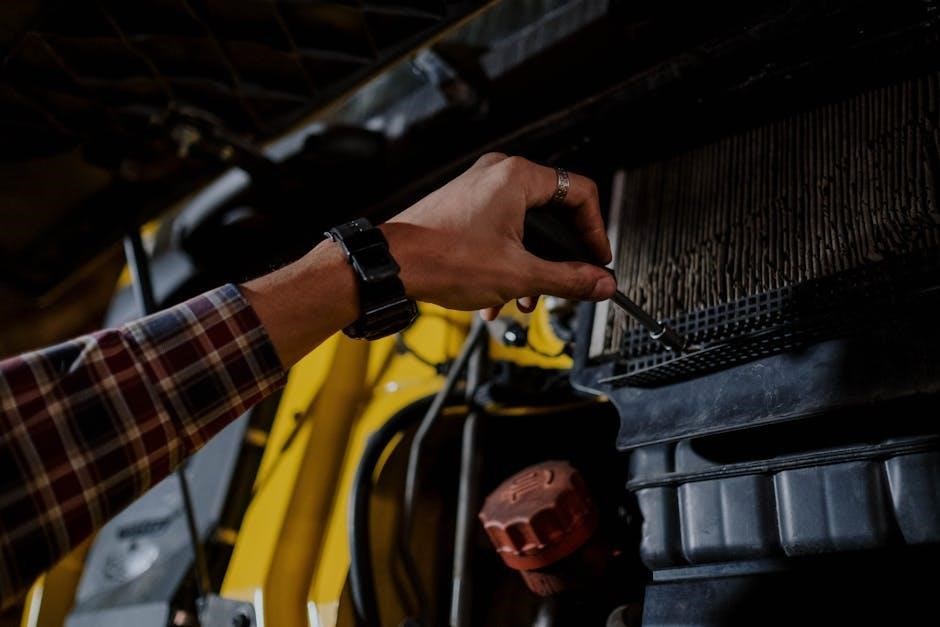
Schedule 1 Truck Inspection Ontario PDF: A Comprehensive Guide
Schedule 1 inspections, detailed in the official Ontario PDF, are crucial for commercial vehicle safety. These inspections, covering brakes to lights, ensure legal compliance and operational readiness for trucks operating within the province.
Understanding the Ontario Commercial Vehicle Inspection
Ontario’s Commercial Vehicle Inspection program is a cornerstone of road safety, meticulously outlined in the Schedule 1 inspection PDF. This program isn’t merely a formality; it’s a legally mandated process designed to proactively identify and rectify mechanical deficiencies in commercial vehicles, particularly trucks, before they contribute to accidents.
The inspection process focuses on critical components impacting vehicle control and safety, encompassing brake systems, steering mechanisms, tire conditions, lighting functionality, and the integrity of coupling devices. Regular inspections, documented and readily available, demonstrate a commitment to responsible operation and adherence to provincial regulations.
Understanding the nuances of these inspections is vital for fleet owners, drivers, and mechanics alike. Resources from the Ministry of Transportation (MTO) provide detailed guidance, and the official Schedule 1 document serves as the definitive checklist. Failure to comply can result in hefty fines, vehicle immobilization, and, most importantly, jeopardize public safety.

What is Schedule 1?
Schedule 1, detailed in the Ontario PDF, is a standardized safety inspection for commercial motor vehicles. It verifies critical components, ensuring trucks meet stringent provincial safety standards.
Defining Schedule 1 Inspections for Trucks
Schedule 1 inspections represent a comprehensive evaluation of a truck’s mechanical and safety condition, as outlined in the official Ontario PDF document. These aren’t merely cursory checks; they are legally mandated assessments designed to proactively identify and rectify potential hazards before they contribute to accidents. The inspection process meticulously examines vital systems, including braking mechanisms, steering components, suspension integrity, tire condition, and the functionality of all lighting and reflective devices.
Specifically, the Schedule 1 inspection focuses on ensuring that each truck operating on Ontario’s roadways adheres to the established safety regulations. This includes verifying the proper operation of coupling devices, crucial for maintaining secure connections between tractor and trailer units. The inspection isn’t limited to mechanical aspects; it also encompasses a review of necessary documentation, confirming that all required permits and registrations are current and valid.
Furthermore, the Ontario MTO emphasizes the importance of a thorough pre-trip inspection conducted by the driver, complementing the formal Schedule 1 process. This proactive approach helps identify immediate issues and contributes to overall road safety. The detailed checklist within the PDF serves as a guide for both inspectors and drivers, promoting consistency and accuracy in the evaluation process.
Legal Requirements & Compliance
Schedule 1 truck inspections in Ontario are not optional; they are a strict legal requirement enforced by the Ministry of Transportation (MTO). Compliance with these regulations, detailed within the official Ontario PDF, is paramount for all commercial vehicle operators. Failure to adhere to Schedule 1 standards can result in significant penalties, including hefty fines, vehicle immobilization, and even operational shutdowns.
The Ontario Highway Traffic Act mandates regular inspections, with frequencies determined by vehicle type and usage. Operators are legally obligated to maintain detailed records of all inspections performed, demonstrating a commitment to safety and regulatory adherence. These records must be readily available for review by MTO enforcement officers during roadside checks.
Beyond the basic inspection, the PDF outlines specific criteria for passing or failing each component check. Maintaining a safe and compliant fleet requires a thorough understanding of these standards. Furthermore, operators are responsible for promptly addressing any identified deficiencies, ensuring that all repairs are conducted by qualified technicians and properly documented. Consistent compliance minimizes legal risks and promotes a safer transportation environment throughout Ontario.

The Schedule 1 Inspection Checklist
Schedule 1, as outlined in the Ontario PDF, details a comprehensive checklist. It covers critical areas like brakes, steering, tires, lights, and coupling devices, ensuring thorough vehicle assessment.
Brakes and Brake Systems
Brake systems are paramount in Schedule 1 inspections, detailed within the Ontario PDF guidelines. Inspectors meticulously examine brake lines, hoses, and connections for leaks, damage, or wear. The service brakes must function effectively, exhibiting adequate stopping power when tested. Emergency brakes, or parking brakes, require verification of their holding capacity on grades, ensuring the vehicle remains secure when parked.
Air brake systems undergo specific scrutiny, including low-pressure warnings, spring brake activation, and proper air compressor operation. Brake drums or rotors are assessed for cracks, heat checking, and appropriate thickness. Brake pads or linings must meet minimum thickness requirements. Any deficiencies in the brake system, even minor ones, can lead to immediate inspection failures, prioritizing road safety. Proper adjustment and functionality are key, as outlined in the official Ontario documentation;
Inspectors will also verify the presence and proper operation of any anti-lock braking systems (ABS), if equipped, contributing to overall vehicle control and safety standards.
Steering and Suspension
The Schedule 1 inspection, as detailed in the Ontario PDF, places significant emphasis on steering and suspension components. Inspectors thoroughly examine steering linkage for excessive play, wear, or damage, ensuring responsive and precise vehicle control. Power steering systems are checked for fluid leaks and proper operation, vital for driver comfort and maneuverability.
Suspension components, including springs, shock absorbers, and leaf springs, are inspected for cracks, broken leaves, or signs of deterioration. Mounting brackets and U-bolts are verified for tightness and structural integrity. Worn or damaged suspension parts compromise vehicle stability and handling, posing a safety risk. Tire condition is also indirectly assessed as part of the suspension check, looking for uneven wear patterns.
The inspection ensures all steering and suspension elements function harmoniously, maintaining proper alignment and load distribution. Any identified deficiencies, per Ontario regulations, necessitate immediate repair to guarantee safe operation and prevent potential accidents.
Tires and Wheels
According to the Schedule 1 guidelines outlined in the Ontario PDF, a comprehensive tire and wheel inspection is paramount for commercial vehicle safety. Inspectors meticulously check tire tread depth, ensuring it meets the minimum legal requirements for safe traction and braking performance. Sidewall integrity is assessed for cuts, bulges, or any signs of damage that could lead to tire failure.
Wheels are examined for cracks, bends, or weld repairs, which compromise structural integrity. Lug nuts are verified for proper torque, preventing wheel detachment – a critical safety hazard. Valve stems and caps are inspected for leaks and secure attachment. Tire pressure is checked against manufacturer specifications, as under or over-inflation affects handling and tire wear.
The Ontario inspection also considers tire matching – ensuring tires on the same axle are of the same size and type. Proper tire and wheel maintenance, as dictated by the PDF, is essential for maximizing vehicle safety and extending component lifespan.
Lights and Reflectors
The Schedule 1 inspection, detailed within the Ontario PDF, places significant emphasis on the functionality of a truck’s lighting and reflector systems. All required lights – headlights, taillights, brake lights, turn signals, and marker lights – must be operational and properly aligned. Inspectors verify that lenses are clean, undamaged, and emitting the correct color of light.
Reflectors, crucial for nighttime visibility, are checked for cleanliness, secure mounting, and retroreflectivity. This ensures they effectively return light to oncoming traffic. The Ontario regulations, as outlined in the PDF, specify the type and placement of reflectors required on commercial vehicles.

Wiring and connections are inspected for damage or corrosion, preventing intermittent or complete light failure. Functionality is tested under various conditions, including braking and turning. Maintaining a fully functional lighting and reflector system, per the PDF guidelines, is vital for preventing accidents and ensuring safe operation, especially during periods of low visibility.
Coupling Devices
Schedule 1 truck inspections in Ontario, as detailed in the official PDF document, rigorously examine coupling devices – including fifth wheels, pintle hooks, and drawbars – for safe and secure operation. Inspectors verify that these components are free from cracks, excessive wear, and distortion, ensuring they can withstand the stresses of towing and hauling.
The locking mechanisms are thoroughly tested to confirm proper engagement and prevent accidental disconnections. All pins and fasteners must be present, securely tightened, and in good condition. Lubrication levels are checked to ensure smooth operation and prevent premature wear, as specified within the Ontario PDF guidelines.
Furthermore, the inspection covers the condition of the coupling device’s mounting, ensuring it’s firmly attached to the vehicle frame. Compliance with dimensional requirements and load ratings, outlined in the PDF, is also verified. A properly functioning coupling device is paramount for maintaining vehicle control and preventing serious incidents on Ontario roadways.

Preparing for Your Inspection
Schedule 1 readiness involves gathering required documentation and performing a detailed pre-inspection walkaround, referencing the Ontario PDF. This proactive approach minimizes failures.

Gathering Necessary Documentation
Prior to any Schedule 1 truck inspection in Ontario, meticulous documentation gathering is paramount for seamless compliance. The official Ontario Schedule 1 PDF doesn’t explicitly detail every document, but generally, you’ll need the vehicle’s registration, proof of insurance, and any relevant permits for the cargo being transported.
Furthermore, having the vehicle’s maintenance records readily available is highly recommended. These records demonstrate a commitment to preventative maintenance and can quickly address any questions an inspector might have regarding recent repairs or servicing. Keep records of all past inspections, noting any deficiencies identified and the corrective actions taken.
For vehicles operating under a commercial license, ensure you have the operator’s license and any necessary commercial vehicle operator’s registration (CVOR) certificate. A valid driver’s abstract can also be beneficial. Having digital copies accessible on a tablet or smartphone, alongside physical copies, can expedite the inspection process. Remember, a well-prepared documentation package showcases professionalism and a dedication to safety, potentially streamlining the entire inspection.
Performing a Pre-Inspection Walkaround
A thorough pre-inspection walkaround is a critical first step, even before consulting the Ontario Schedule 1 PDF checklist. Begin by visually inspecting tires for proper inflation, tread depth, and damage. Check wheels for cracks or loose lug nuts. Proceed to examine all lights – headlights, taillights, brake lights, turn signals, and reflectors – ensuring they are clean and functioning correctly.
Next, carefully inspect the brake lines and hoses for leaks or wear. Verify the steering components are secure and show no signs of excessive play. Examine the coupling devices (fifth wheel, pintle hook) for proper locking and structural integrity. Don’t forget to check the windshield for cracks and the wipers for functionality.
This walkaround isn’t just about ticking boxes; it’s about developing a keen eye for potential issues. Document any discrepancies found, as this demonstrates proactive safety measures. A systematic approach, following a consistent pattern, ensures nothing is overlooked. This proactive step can prevent costly failures during the official Schedule 1 inspection.

Common Inspection Failures
Schedule 1 inspections frequently reveal brake system deficiencies, tire and wheel issues, and lighting/visibility problems. Addressing these proactively, using the Ontario PDF, avoids costly downtime.
Brake System Deficiencies
Brake system failures represent a significant portion of Schedule 1 inspection rejections in Ontario. Common deficiencies, detailed within the official PDF document, include worn brake pads or shoes, leaking brake lines, and malfunctioning air brake components. Inspectors meticulously examine brake chambers, slack adjusters, and the overall condition of brake drums or rotors.
Insufficient brake lining thickness is a frequent issue, requiring immediate attention. Air brake systems undergo rigorous testing, verifying proper air pressure build-up and release; A malfunctioning anti-lock braking system (ABS) will also result in a failed inspection. Furthermore, inspectors check for proper operation of the parking brake, ensuring it can securely hold the vehicle.
Properly maintained brakes are paramount for safe operation. The Ontario Schedule 1 inspection prioritizes brake functionality, and addressing any identified deficiencies promptly is crucial for compliance and, most importantly, road safety. Referencing the PDF checklist ensures all critical components are thoroughly inspected.
Tire and Wheel Issues
Tire and wheel related problems frequently cause failures during Schedule 1 truck inspections in Ontario, as outlined in the official PDF guide. Inspectors carefully assess tire tread depth, ensuring it meets minimum legal requirements for safe operation. Worn or damaged tires significantly compromise braking performance and vehicle control.
Beyond tread depth, inspectors examine tires for cuts, bulges, and uneven wear patterns, all indicators of potential failure. Wheel condition is equally critical; they check for cracks, dents, and loose lug nuts. Proper torque on lug nuts is essential to prevent wheel separation. Mismatched tires on the same axle are also a common deficiency.
Valve stems and tire pressure are verified to ensure correct inflation. The Ontario Schedule 1 inspection process emphasizes tire safety, and adherence to the standards detailed in the PDF is vital. Addressing these issues proactively minimizes risks and ensures compliance with provincial regulations, promoting safer roadways.
Lighting and Visibility Problems
Lighting and visibility are paramount for safe commercial vehicle operation in Ontario, and the Schedule 1 inspection, detailed in the official PDF, rigorously assesses these components. Inspectors verify the functionality of all required lights, including headlights, taillights, brake lights, turn signals, and marker lights. Each light must be operational and properly aligned.
Beyond basic functionality, lens condition is crucial; cracked or broken lenses diminish light output and can create glare for other drivers. Reflectors are also inspected for damage or deterioration, as they enhance visibility, particularly at night. Proper operation of any auxiliary lighting, such as fog lights, is also confirmed.
The Ontario Schedule 1 inspection extends to visibility aids like windshields and mirrors. Windshields must be free of cracks or obstructions that impair the driver’s view. Mirrors need to be securely mounted and properly adjusted. Addressing these issues, as outlined in the PDF, is essential for preventing accidents and maintaining compliance.

Resources and Downloads
Official Ontario Schedule 1 PDF documents provide detailed inspection criteria. Access the Ministry of Transportation (MTO) website for forms, guides, and updates regarding commercial vehicle inspections.
Official Ontario Schedule 1 PDF
The Official Ontario Schedule 1 PDF is the definitive resource for commercial vehicle inspections. This document, available through the Ministry of Transportation (MTO), outlines the precise standards and procedures inspectors follow. It details every component subject to scrutiny, from braking systems and steering mechanisms to lighting, tires, and coupling devices.
Downloading and thoroughly reviewing this PDF is essential for all truck owners, operators, and drivers. Understanding the specific requirements minimizes the risk of failed inspections and costly downtime. The Schedule 1 form itself serves as a checklist, categorizing potential issues as “Checked and OK,” “Attention Required,” or “Immediate Attention Required.”

The PDF isn’t merely a list; it’s a legal requirement. Compliance with Schedule 1 ensures vehicles meet safety standards, protecting drivers and the public. Regularly checking for updated versions of the PDF is crucial, as regulations can evolve. Utilizing this resource proactively demonstrates a commitment to safety and responsible operation within Ontario’s commercial transportation network.

Links to Ministry of Transportation (MTO) Information
The Ontario Ministry of Transportation (MTO) website is the primary source for all Schedule 1 truck inspection information. Direct access to official guidelines, updates, and related policies is readily available through their online portal. These resources are vital for staying current with evolving regulations and ensuring full compliance.
Key links include sections detailing commercial vehicle safety, inspection standards, and downloadable forms, including the crucial Schedule 1 PDF. The MTO site also provides information on driver qualifications, vehicle registration, and permit requirements, offering a comprehensive overview of commercial transport regulations.
Furthermore, the MTO offers access to online training materials and educational resources designed to enhance understanding of inspection procedures. Regularly consulting these MTO links is paramount for fleet managers, drivers, and anyone involved in commercial vehicle operation in Ontario. Staying informed minimizes risks and promotes a culture of safety and legal adherence within the trucking industry.